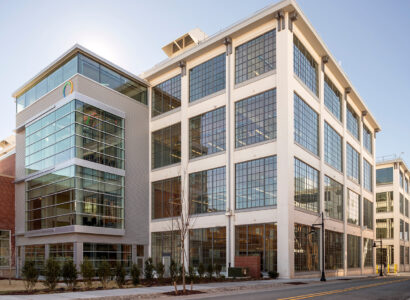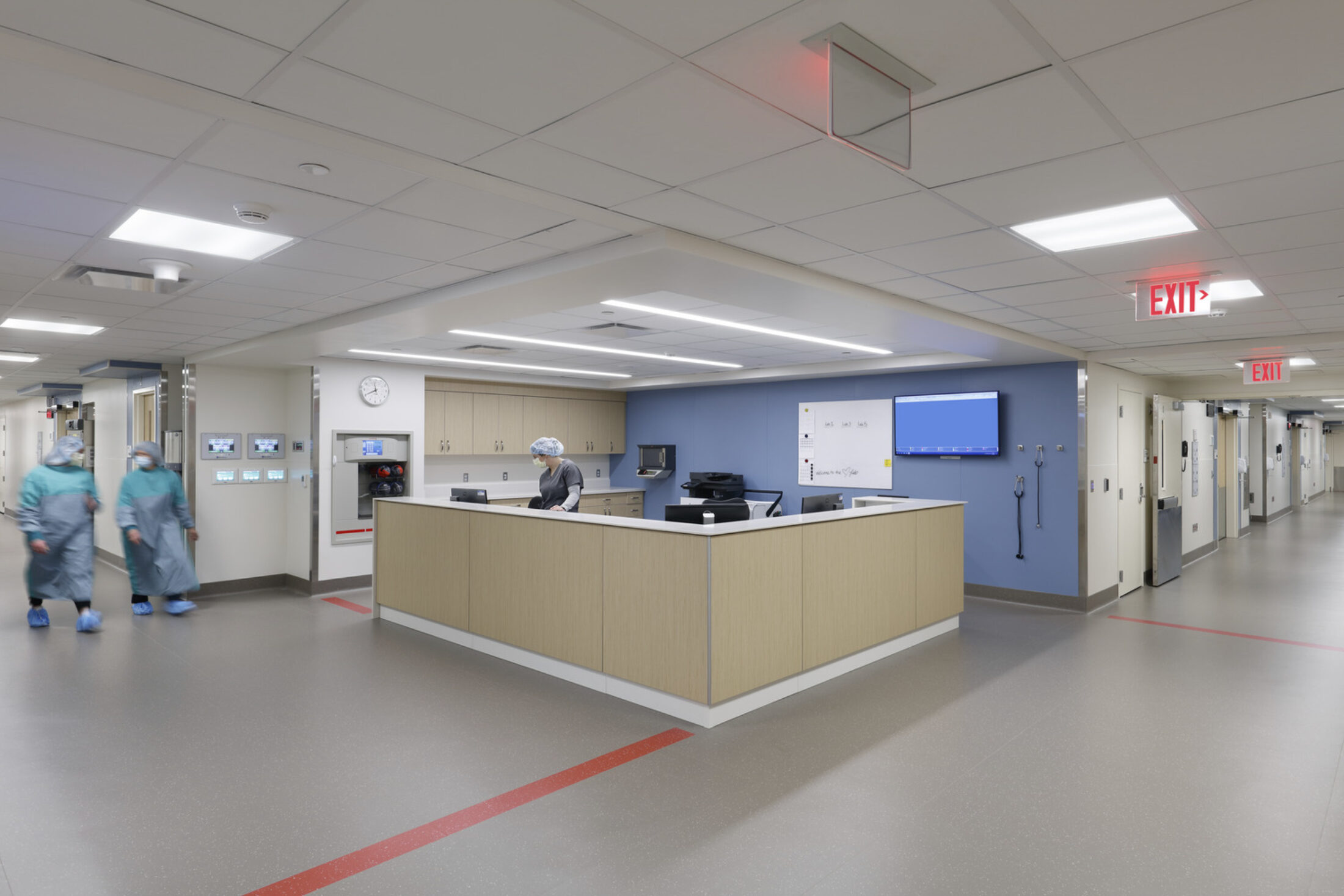
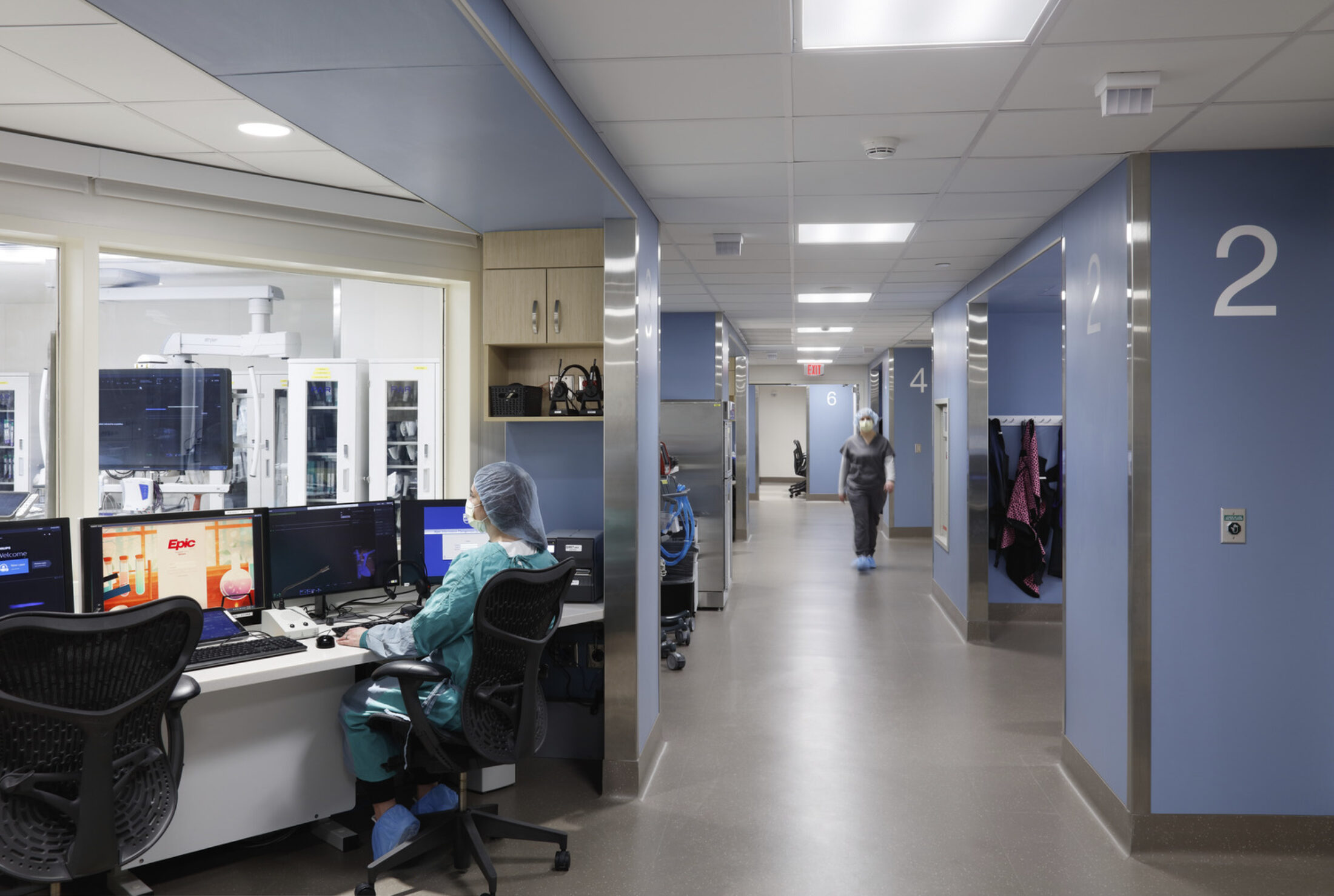
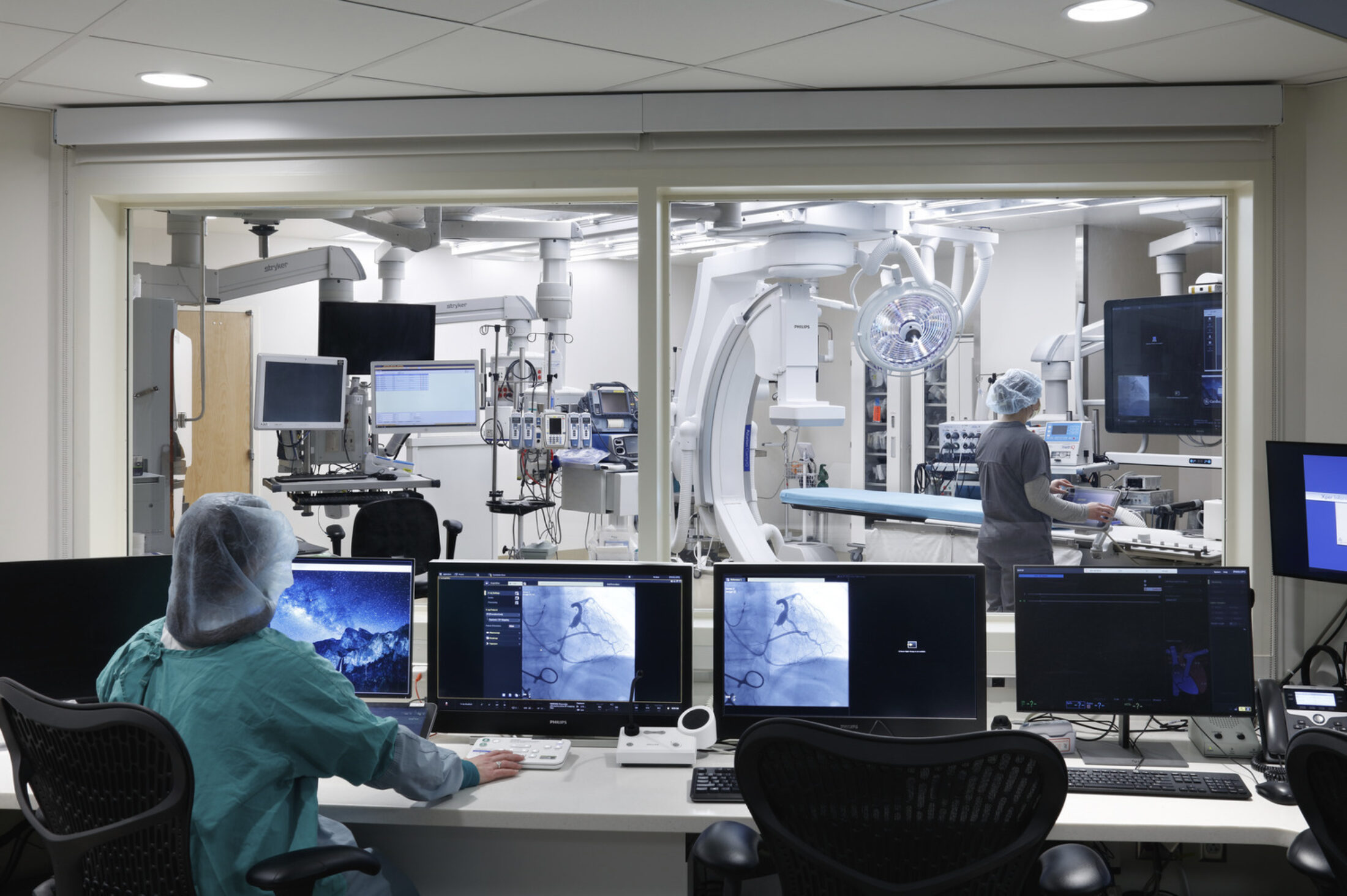
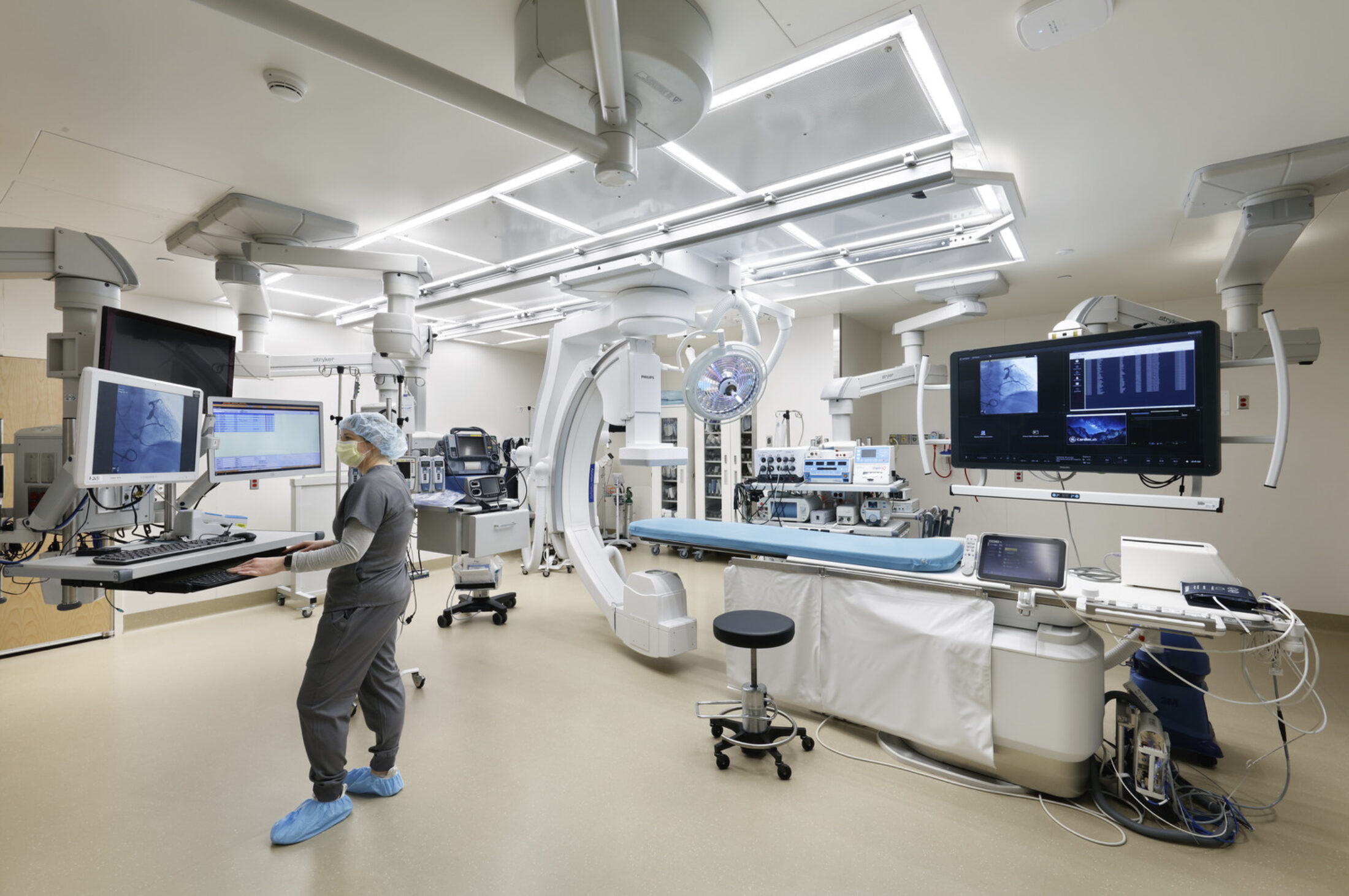
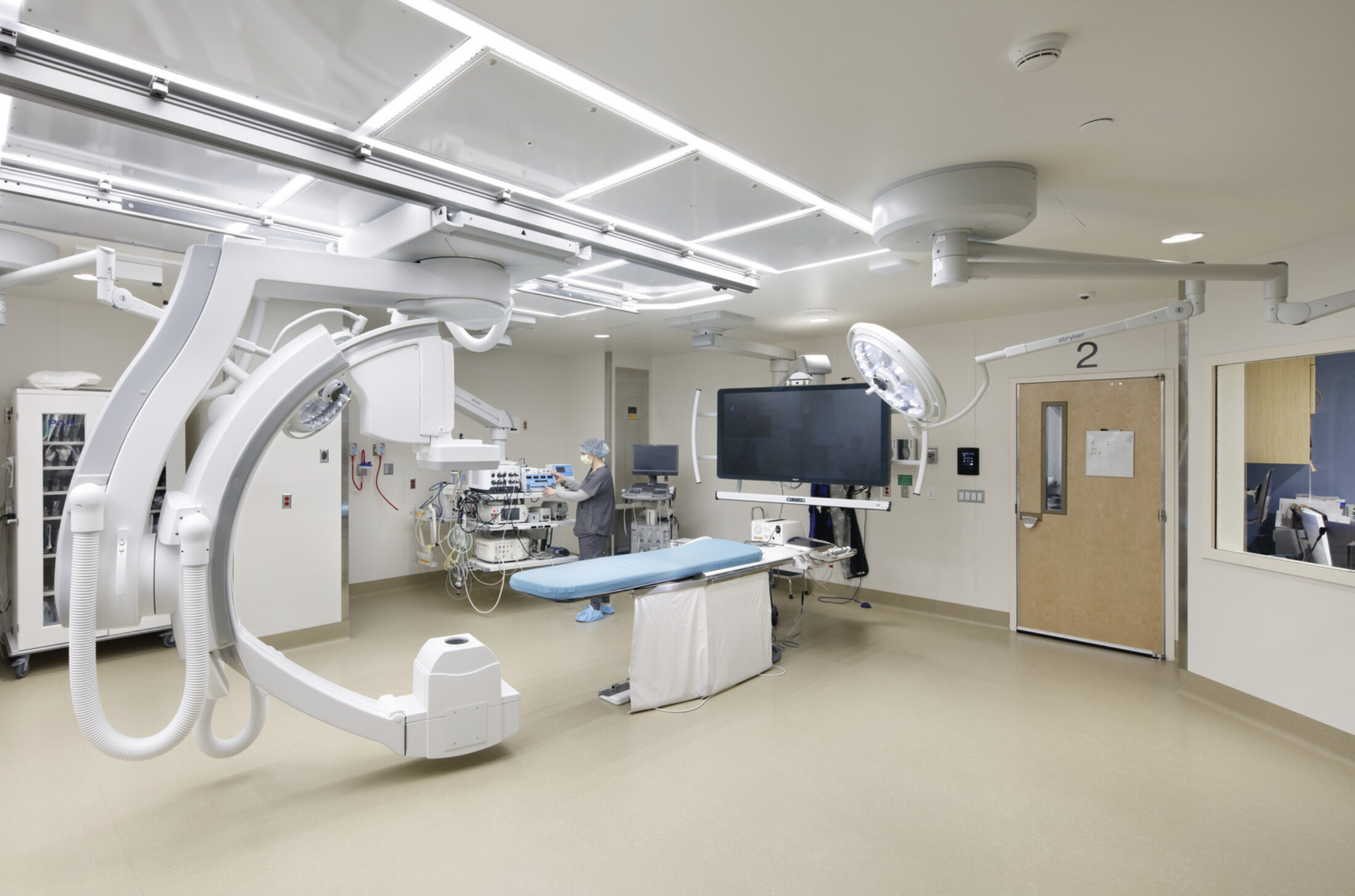
The University of Iowa Hospitals & Clinics (UIHC) Heart & Vascular Center cardiac catheterization expansion and renovation created six new Class 3 imaging procedure rooms outfitted with advanced technology and “right-sized” to meet current standards and provide a safer environment for patients and staff. One additional existing imaging procedure room remained in place, for a total of seven procedure rooms. This complex project also included related staff support spaces, renovation of existing offices and conference rooms, as well as significant mechanical and electrical infrastructure upgrades. Located on the fourth floor of the academic medical center, the project presented challenges that required creative and innovative solutions. The design process included buy-in from numerous hospital departments and coordination with multiple equipment vendors to achieve the goal of state-of-the-art catheterization labs.
Primary project challenges included:
-
Expanding in place while maintaining operation of adjacent procedure areas throughout construction
-
Routing new, larger HVAC ductwork from the penthouse to the landlocked procedure department three stories below
-
Limited existing floor-to-floor ceiling heights
-
Project design occurring during the height of the COVID-19 pandemic
The increased mechanical and electrical infrastructure required to support the project expansion necessitated significant work outside of the primary project area, encompassing an additional 8,400 square feet in adjacent and remote areas of the building. A new air handling unit was installed in the penthouse, and new electrical service gear was installed in the basement. To route new air supply from the penthouse, 1,600 square feet of enclosed building area was added across four levels and seamlessly integrated with the existing building exterior. This approach prevented disruption to other departments while accommodating ductwork that existing chases could not support.
During construction, the cath lab procedure area was able to remain operational due to careful planning and close collaboration with the contractors. The project was divided into three main phases, allowing contractors access to larger work areas to complete construction efficiently and turn spaces over in a timely manner. Disruptive construction activities were limited to hours outside of normal patient operations. Sound-control partitions and blankets were also utilized. Existing mechanical and electrical systems remained in use until new systems were brought online, resulting in minimal downtime during switchover.